

Ideas about one’s own old age
Author: Beata Roguska
|
2026-05-20
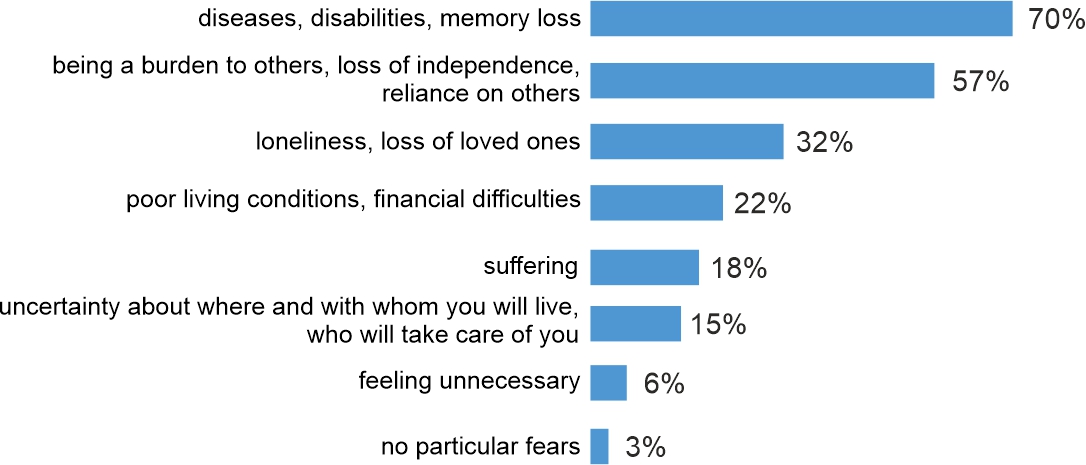
For the vast majority of Poles, the period of old age is associated with various fears. Only a small fraction do not feel anxiety about this stage of life (3%). Regardless of age, respondents consistently fear illnesses, disabilities, and memory loss the most when thinking about their own old age (70%). More than half (57%) are afraid of losing independence, becoming a burden to others, and being dependent on other people. Concerns about deteriorating health and the related need for more support from others are expressed significantly more often than any other worries (86% compared to 69% who express anxiety in other areas). Nearly one-third (32%) fear loneliness and losing loved ones. Concerns about poor living conditions and financial difficulties have decreased compared to previous years—currently, 22% of respondents express these fears. About one-fifth (18%) are afraid of suffering, and 15% worry about where and with whom they will live in the future and who will take care of them in old age. Relatively few (6%) worry about being unnecessary to anyone.
Regardless of your current age and life situation, please tell us what you are most afraid of when thinking about your old age:
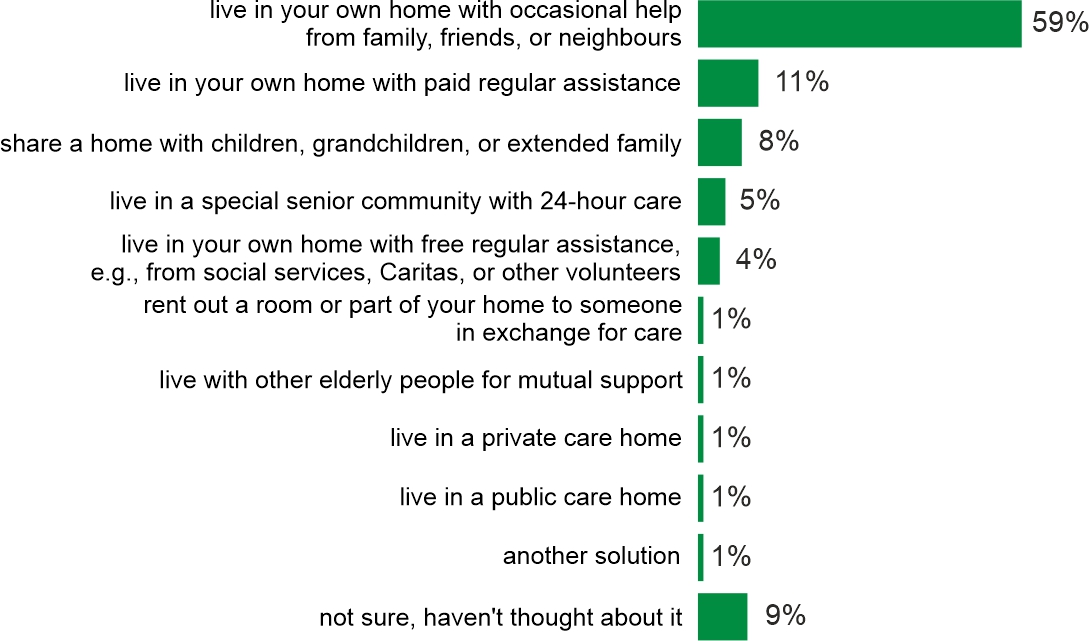
We were also interested in how respondents would like to arrange their lives in old age when they need help. Almost three-fifths (59%) would prefer to live in their own homes, receiving occasional help from family, friends, or neighbours. One in nine would like to live in their own homes with paid regular assistance (11%) or free care, such as social assistance, Caritas, or other volunteers (4%). Compared to previous surveys, fewer people express a desire to live with children, grandchildren, or extended family—only 8% now, compared to 20% over a quarter-century ago. For the first time, we included the option of living in a senior community with 24-hour care, which seems attractive to 5% of respondents. Other options, such as private retirement homes, public care homes, or living with other elderly people for mutual support, are mentioned less frequently.
How would you like to organize your life in old age when you need help? Would you like to:
More than four-fifths of respondents under the age of 60 (82%) expect to rely on a pension in old age. The majority (60% overall) anticipate working at least part-time. Over half (55%) count on savings and investment income, including 28% counting on income from the "third pillar" (voluntary) pension system.
What will be your sources of income in old age?
Responses from people under 60
Responses from people under 60
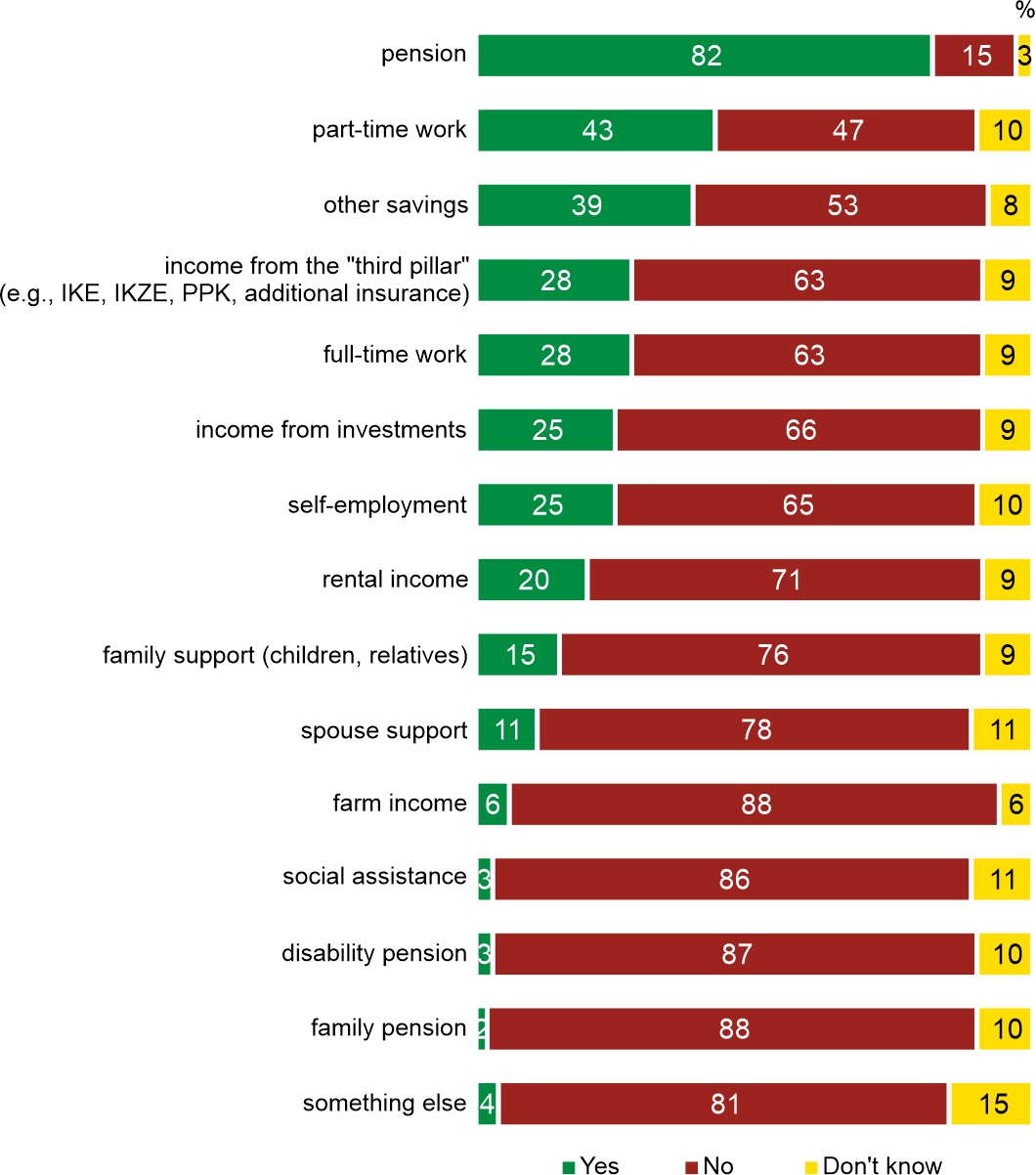
Comparison of this year's responses from people under 45 not receiving a pension or disability benefit with data from 2016 shows that fewer people now expect to receive a pension than ten years ago (79% vs. 87% in 2016). More people expect to rely on savings and investment returns (overall increase from 55% to 59%). It is worth noting that more people are also counting on money from the "third pillar" (30% vs. 22% ten years ago). These results reflect, among other things, the growing interest in using voluntary pension programs such as PPK, IKE, or IKZE.
Additionally, there is less willingness to work during retirement compared to ten years ago. Currently, 63% of respondents are interested in employment in older age, compared to 73% in 2016. Finally, fewer people than ten years ago expect to be supported by their spouse (11% vs. 19% ten years ago).
More information about this topic can be found in CBOS report in Polish: "Ideas about one's own old age", May 2026. Fieldwork for national sample: April 2026, N=944. The random sample is representative for adult population of Poland.